
Galley Brag #4
Grace Byron, author of Herculine, on pitching reviews, Brat Girl Summer, and the debut author's role in publishing a book <3

***FYI this interview took place earlier in Dec 2024…movie magic vibes***

EK: Do you wanna introduce yourself and your role in the publishing ecosystem?
GB: Yeah! My name is Grace Byron, and I am a writer. I am a novelist and a critic, and my work has been in places like The Cut, LARB, The Nation, and Bookforum and is forthcoming in places like Vulture.
I came to criticism because I originally wanted to write fiction, but obviously there's not a ton of money in that until you sell a book. And so, I had a friend—another writer who's great, E Taylor—who at the time was the arts editor at Observer, where the real Carrie Bradshaw first had her column.
EK: Obsessed.
GB: Yeah, it was funny. E was very great and said, you should pitch me some book reviews. And so essentially for a year or so, I wrote book reviews at Observer. That led the path for me getting bigger gigs, and then, eventually, I was able to publish short stories and work on a novel. My debut novel is coming out October 2025.
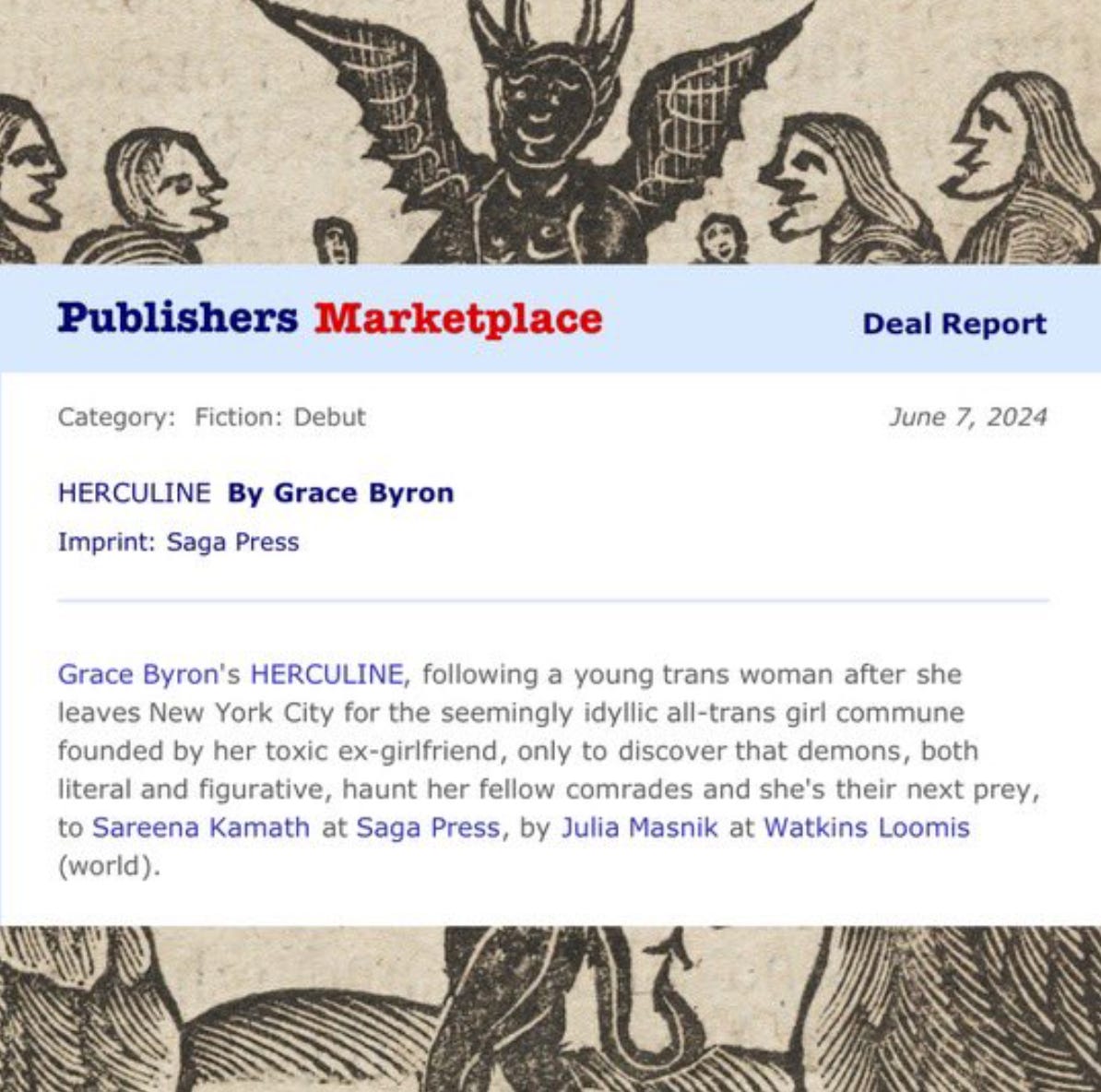
EK: Woohoo!!
GB: I’m so excited.
EK: Yay! Well, we'll have to talk about that, but first, I’m so curious about book criticism since I know very, very little about it. It does feel more and more so like it’s a freelancer venture; I feel like there are very few people on the masthead…
GB: Yeah…
EK: …which is sad to me because obviously people need to be paid well, and there's so much inequity. There have been so many layoffs and consolidation in media in general, but with book criticism specifically, that is something where I specifically feel that dearth. The freelance aspect of it is interesting, because it feels like—to a certain extent—it could widen or level the playing field? Maybe that’s overly optimistic, though.
I'm curious what your experience has been—are you assigned books that are prominent in the culture, or do you receive books and see what connects with you and then pitch from there?
GB: I think that's a really good question because there isn’t a ton of transparency around it. I remember early on while freelancing, Harron Walker had posted this thing about how to freelance, how to pitch, etc., and it was so helpful. It really takes at least one person showing you the way, or talking about in a public way, in order to really get into it. It takes a long time just to understand how pitching works and what editors want.
Even just figuring out what editor’s emails are—I mean, that’s a skillset, right? That's something that you have to learn.
But to your question, I think it gets complicated. On the one hand, when you're a freelancer, there's always a chance that you'll get picked up. And so that could mean more equity for underrepresented voices, but I don't think that's always true. It’s easy to get pigeonholed. Whenever I’ve been approached to write about a certain thing, it's always somebody asking me to write about whatever the latest Big Trans Book is.
Which I love! Like, no shade. I sometimes do want to write about those things. That is important and there should be an ecosystem of criticism and a body of literature around trans writers. However, I prefer to think of myself as a generalist—somebody who can write about Sally Rooney just as much as Imogen Binnie. I want to do both of those things, or even just write about a random Romanian novel.
I think that all depends on the editor. I am often pitching people, but there is usually a limit to what they will accept. Writing about debut novels is really hard. A lot of editors don't care or don't really want to assign reviews about debut authors, or it's hard to get people to care about small press books; it’s hard to get editors to want you to write about underrepresented writers.
I've really wanted to pitch a bunch of books by the small press Archipelago; I would love to shout them out. I think they put out a lot of really, really amazing work. They put out this book a year or two ago that's called The Enlightenment of Katzuo Nakamatsu, and I remember trying to pitch that book. Or, they had a book this year called What Kingdom by Fine Gråbøl. And those are things that are really hard to get accepted, and, if they do get accepted, it's gonna be at a place that doesn't pay well.
A lot of times I have people approach me and they're like, will you write about my book? And even if I want to, it's not a guarantee that I can.
It’s hard. You have to be strategic and ready to adapt to what the freelance market wants you to write about. It’s a lot easier to get something approved if it's an author's second book or a really big release, etc. I haven't gotten to a point yet where I'm writing for one place all the time and they'll let me write about whatever book I want. Even after doing this for a few years, it's really dependent on a lot of factors that are out of my control.
EK: That’s really fascinating. And I really relate to the pigeonholing aspect of it—obviously as a trans editor and a queer editor who receives a lot of that kind of work and is excited by that.
I liked what you were saying about being a generalist. I think the exciting thing about book criticism is when the gap between the author's and the critic’s worldview is being grappled with. It seems like a much more interesting challenge to review books that don’t precisely mirror your own identity and experience.
But it makes sense that it’s hard to place criticism of books outside of the status quo. I think the thing with publishing—at least from my side of things—is that it's sort of this weird snake eating its tale kind of thing where you can only get books reviewed if they've already been aggregated on lists and gotten picked up for reviews. So then the only books getting reviewed are the books that have already become behemoths or are being published in this really big, buzzy way. Those are the ones that end up racking up a lot of reviews because someone will have their take and then someone else will disagree with it. Or it feels worth talking about because it becomes part of the zeitgeist in a way—and then the review is less about the book and more about the response to that book.
GB: Literally. I think we saw that this year with a book like Creation Lake by Rachel Kushner. I loved that book and I love Rachel Kushner, but it does make less room for other books to get that critical attention.
Memoirs are also really hard. For whatever reason, people are really afraid to have people write about memoirs unless it's like a celebrity memoir…
We had sooooo many Miranda July takes and Sally Rooney takes, and I'm glad we did, but, where are the In Universes reviews?
EK: Literally!!!!
GB: I feel that way about soooo many books. There were books that I read where I'm like, I would love to read a bunch of people's take on X, Y, and Z book, but there isn't enough room in print for that. I think that's a real problem. It exposes who gets to write about what and all these sort of inequities. It’s a real bummer, and it's really strange to me and seems sort of arbitrary at times. But I also wanna write about those big books, too.
I think part of being in the books community is being able to be involved in the larger discourse, but also there has to be room to write about Susan Stryker or Sevgi Soysal or whomever else.
EK: No, I mean it's interesting. On my end, I’m always aware of the gatekeeping aspects of editors. I see that on the publishing side—and obviously there’s gatekeeping in every industry—but I hadn’t really considered the editor’s role in traditional media in terms of who is approving or assigning these reviews and who is paying for these reviews. And I think it's funny with the whole like Carrie Bradshaw of it all, 'cause I think there's some meme about how she gets paid like $4 a word, or like something insane?
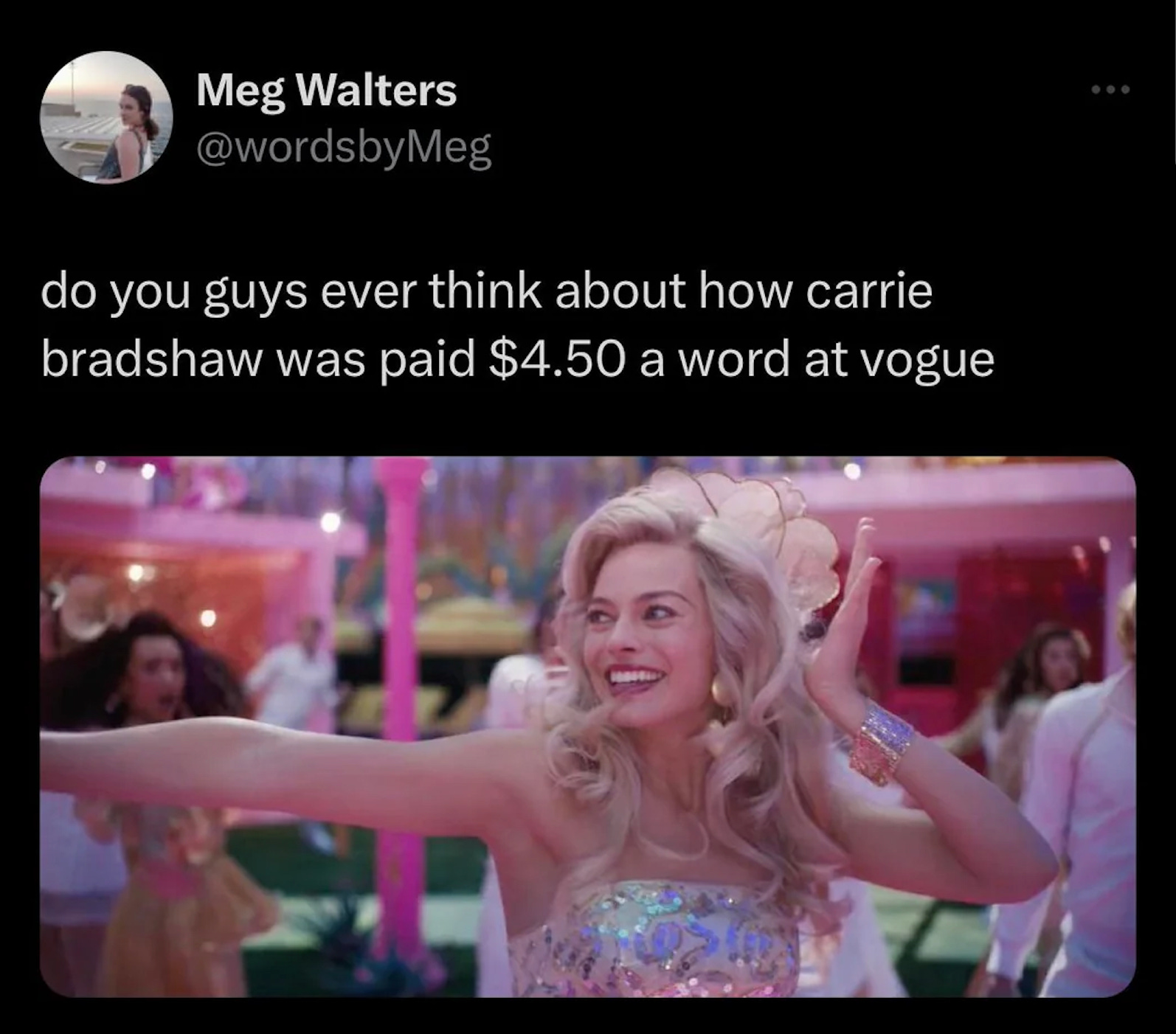
GB: It's something insane.
EK: I'm like, with inflation, too—queen that's like, $10 a word now? But it's really interesting what you were saying: there's this balance between needing to pay rent and pitching reviews that you know are gonna pay but are maybe going to be the 10th review of this buzzy book vs reviewing something that has not really been publicly discussed for an outlet that is not going to be able to pay you as much for your time and consideration.
It seems like such a difficult thing to grapple with. And it’s also something that you are probably thinking about from multiple angles because you have your book coming out in 2025, which is so fucking good…
GB: It's so crazy to me. I keep forgetting that you've read it…
EK: Yeah, I have read it. It's soo fucking good. I think about it all the time, and we can talk more about that offline. . . But I'm so happy about Saga Press. I've talked to so many folks there; they're so sick.
But, all that being said, I know you polled a bunch of people—me included—about how to make a book a phenomenon (“how to make it brat”) and it really got me thinking. Because, as someone on the publishing side, I am always asking myself how to make something stand out and of course that starts with early buzz. Obviously, there's stuff you can do on the author’s side with guerilla marketing and then there's the behemoth of the publishing house. What did you find out as a result of that exercise? What were you surprised by?
GB: Yeah, I've never published a book before, so I'm trying to come at it in a humble way and be like, what do other people know? Obviously Sally Rooney sort of initiated doing the hats and there's lots of people who've done merch in different ways. There’s the publishing party, which is a big thing that Sophia June has written about. There's the physical object of the book, which is another way to really get attention, such as Blackouts by Justin Torres—which is such a beautiful object. Or McSweeney's does really beautiful books.
There's so many ways to think about how a book moves through the world in that social way and Charli XCX is nothing if not a brilliant marketer. So I jokingly but also somewhat seriously was like, how do you launch a book like this? Books in our culture don't have the same cultural cachet, but there have been books that have been splashy.
For instance, there was a group of women who made these All Fours Group Chat hats. Which I don't know if Miranda was actually involved in that, but regardless, it was a brilliant thing.
But a lot of that is out of your control. The cover is somewhat in your control, but not entirely. How many reviews you get is not really in your control, but there are ways you can do campaigns or non-traditional book events that might help you get coverage. I went to Chelsea Manning's book launch, and it was really funny 'cause it was at a club and there were DJs and no one was really talking; there was no reading.
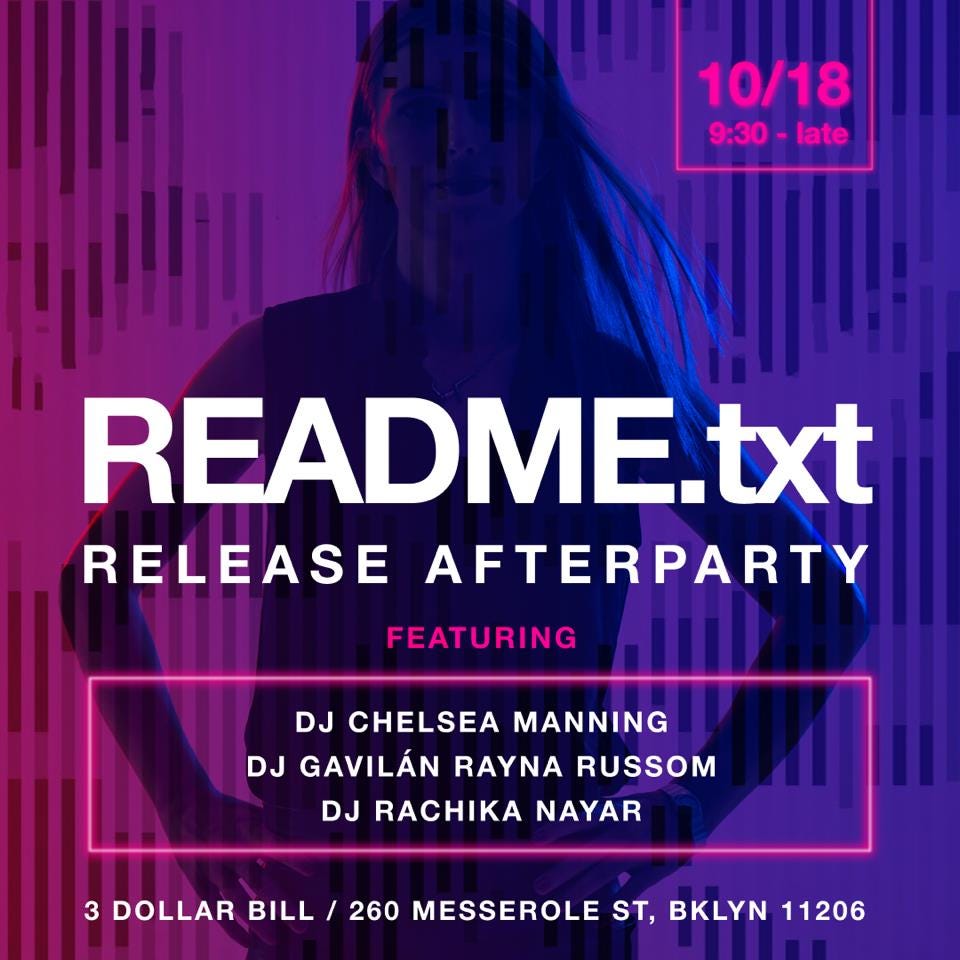
There's so many different ways to approach that as an author—from dropping the cover in a special way to making little things that people can take home, whether it's like a bracelet or a hat or weird bookmark. I think those personal touches that relate to the themes or the color palettes of your book help it stand out.
I don't think I'm that shrewd of a marketing person. I try to be more like, okay, it’s just about the writing, but at the same time for it to be about the writing you do have to sell books in order to get the next book deal. I obviously want my book to do well and want people to read it and have it be somewhat splashy.
But people were like, you should do different kinds of photo shoots or get certain people to post—and then this goes back to the whole galley thing. Who gets a galley and who's posting about it. I think that's something that Jackson Howard has really pioneered.
I also think it matters who does the Interview magazine piece, Jake Nevins and Taylore Scarabelli have also really transformed how author interviews are happening. I think all of those pieces together inform how a book goes out into the world and how it's perceived and what it's viewed as being in conversation with.
You can kind of try to construct which literary people are writing about it, what kind of literary people are interviewing you, etc. So I wonder, how can you orchestrate that? Not in the completely hands-on OCD Virgo way that I would like to, but in a way that's like how do I wanna position myself in the literary world?
Anyway, I posted some of the answers I got on Instagram. Do you remember any that stood out to you that I haven't said?
EK: I don't, but I have so many thoughts based on what you said.
GB: Tell me, tell me your thoughts.
EK: Yeah, well, we'll get into the galley brag of it all after this, but there's a few things that come to mind. It’s like you said with the Sally Rooney and All Fours Group Chat hats: who is coming up with those ideas and who is getting compensated? It’s not like Sally Rooney made the bucket hats; her publisher’s marketing team did. And the hats made the book super splashy, which helped sell books, but I wonder if whomever came up with that idea was compensated appropriately…
GB: And marketers have soooo many books they're supposed to be covering. Unless you're Elif Batuman or Rachel Cusk, unless you have that caliber, you're not gonna be given the resources to do something massive like that. And so, I think about the other side of it too, right? How can I do X, Y, Z within the budget, time, money, and resources that I have?
EK: Exactly. It's also very interesting to think about who is inciting that buzz. Like, obviously you talked about editors who are like, I'm using my cultural cachet to put this out in the world. And then there are the big houses that are like, we're gonna throw all of our money behind this book to make it a big thing. But even more so it seems authors are taking on that pressure to be like…
GB: …how do I become a marketer?
EK: Exactly! Or like, how do I mobilize my communities or my brand or blah, blah, blah, blah. And it sucks because it really shouldn’t be the author’s job, and I know a lot of people—including authors I've worked with personally—that are like, I really don't like being online. It freaks me out, which is totally fine and normal. How does that feel on your end as someone who has obviously built a platform for yourself—?
GB: Have I?
EK: I mean, I think so! But it's all so comparative, which is funny 'cause it's also something you talk about in your forthcoming novel…
GB: …oh yeah? Hahaha.
EK: These sort of circles of influence and how—at a certain point—when you're in those circles it's so cutthroat and competitive and there's also the outsiderness of it all as well. Are you feeling that pressure?
GB: Absolutely! Yeah, I’ve always joked like, if I had a big enough platform, if I had a big enough whatever, I wouldn't be online. I wouldn't have Instagram, I wouldn't have Twitter, but especially as somebody who's freelancing, I am going down with the ship on Twitter because it is a way to get gigs. We can talk about the toxicity of social media all we want, but it is networking, it is jobs. Besides, I also like meeting other writers and editors who I then become friends with and grab a drink with.
All those things are important. It's not just transactional; it's also this communal space to meet people and chat with people and get connected and blah blah blah blah blah. And, also, it's extremely stressful. Kurt Vonnegut never had social media. People just sent a letter to his editor and were like, can he come in and do an interview? Or, I don't know how they did it, but it happened, and it wasn't on him to orchestrate that.
There's a lot of crumbling infrastructure in the books world but there are still hardworking, wonderful people who are doing their best. But everybody's getting less of the pie and, as you know, we're in an economic depression and a recession and everybody's eating tinned fish…Girl Dinner is what now? A martini and fries?
EK: Yeah, Girl Dinner is a Soylent and a Diet Coke. Or my Girl Dinner when I'm editing after work is a beta blocker and a Diet Coke to offset the sleepiness…
GB: Noooo!
EK: Anyways, it’s interesting because there’s traditional media (aka journalism) and then there's social media. But then it feels like there's a split within social media: there's traditional social media, which obviously there's been the whole history with LiveJournal, blogs, etc. going up to this point. But like you were saying with Twitter: the sink is shipping and I feel myself clinging on, too. There's so many people I've DM’ed over the past few years to send copies of books to or journalists I've reached out to just to be like, Hey, I love your stuff—do you wanna write a book?
So, a lot of that is online networking where, yes, people do go viral, but for journalists and authors and editors, there’s this sort of exchange and goodwill that’s built up. And that does lead to traditional media coverage, and sometimes—but not always—book sales.
Then there's new social media, like BookTok, which many people don't necessarily understand. And it’s strange because random people go viral—which is like, good for them—but there's not really a way of orchestrating virality in the same way that there maybe was in different spaces. And those books sell.
And then—on the other end—there are the people who are viral on TikTok and have these massive followings and who write books, but then those books might not necessarily perform or sell in the way that publishers might expect. Because there's this disconnect between watching an ASMR cooking video and buying a $40 ASMR cookbook. But maybe part of that is also the lack of connection with traditional media?
GB: Absolutely.
EK: I guess I'm curious how that behemoth looks to you? Again, it is such a strange thing to have to grapple with.
GB: Yeah, I'm not great at it. My boyfriend shows me TikToks. I don't go on TikTok. I think I had TikTok for like two seconds, and it was like, you're a lesbian and we're gonna show you lesbian stuff. And I'm like, I'm a bisexual actually.
But yeah, I don't know. I read this really great piece in the London Review of Books about BookTok by Malin Hay that I liked. But honestly, I don't really get it. I need other people to explain it to me. I understand it, but I don't get it. I also think the kinds of books that are going viral on BookTok are also similar to what does well on Substack, right?
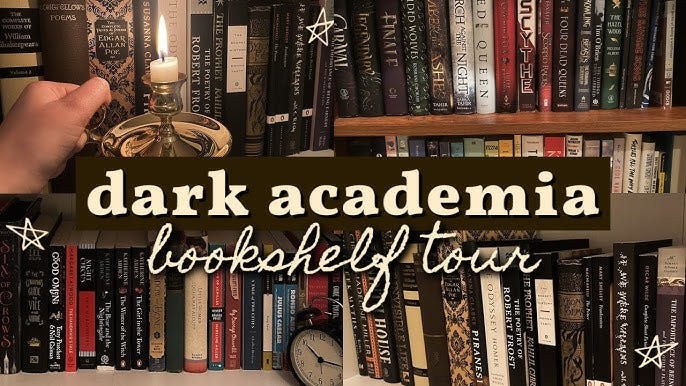
You have a few genres: you have romance; you have so-called “Dark Academia,” which always pretends like Donna Tart is a new discovery, lol; and then you have “Sad White Girl”…Sad Cis White Girl.
EK: I'm so exhausted.
GB: Yeah, I mean I think it's interesting 'cause with my book that was something I was really worried about happening. I was like, yeah, she's trans, but like this is ultimately about a sad white girl. I worried about that feeling or being reductive, but I think Herculine is also touching on a lot of anger over how these systems are set up and who they benefit. It’s like, unless you go to Yale, there’s no guarantees of a financial future. And even then, not everyone who goes to Yale has a guaranteed financial future. Not anymore.
Success is much more about your connections. How well do you fit into some sort of a mold? I think BookTok also really reflects that in the sense that it’s an algorithm. When there is a TikTok of six books with pink covers and they pick one random book by some relatively obscure South Korean author, it’s like, did you actually read that or did you just think the cover was pretty? Sometimes when these BookTokers are reviewing these books, they’ll be like so this one was really weird and I'm like, that's so funny. It's so funny to me to be like, I read Ottessa Moshfegh and then I read this random book 'cause of the cover and I didn't really get it.
And that's fine! Like, I think reading is wonderful, and I don't think anybody should be judged for what they read or how they come across a new author. I just think that model of “can I go viral?” is only gonna work if you're Colleen Hoover or Colleen Hoover adjacent. And there's nothing wrong with that, it’s just its own industry; but I do think it is somewhat separate from the kind of books that we're talking about, which are mostly literary fiction. Then it’s usually only in this specific mold of like Ottessa or Ocean Vuong or Sally Rooney.
These people who do manage to break through do so primarily because the books are accessible and have elements of romance or pulpy genre stuff that I think people who are reading romantic books can connect to. And I think that's great if there's some crossover, but I don't think that BookTok is always a helpful metric.
And again, like you said, it's unpredictable. You can't predict what's gonna do the whole Song of Achilles thing. I think everybody was really surprised by that, but it makes total sense in context. But nobody would've been able to mechanize that and make that sort of thing happen again.
EK: I also don’t really understand TikTok. I was on it at the beginning of the pandemic for like a minute, but I have a lot of ex-girlfriends that are really into standup comedy, and I just kept seeing them on my feed, and was just like, I can't do this anymore.
GB: That's so funny.
EK: Anyways, I think what you're saying is so real where it's like, there is this—not an agenda—but an aesthetic and an algorithm. And if you look critically at what sorts of aesthetics are rewarded by the algorithm—and a lot of people are writing smart, critical analysis about this—nothing is objective.
Obviously, we're looking at data. We're looking at who creates these systems, these algorithms. And obviously they reflect the biases of whomever created it, which is like fatphobia and racism and misogyny and all this stuff. And that influences what is going viral and who is going viral at large, and there are exceptions to this rule, but in many ways it's certain aesthetics that are being rewarded, which are like thinness and whiteness.
GB: Yes, absolutely.
EK: And so it's weird sometimes—like you were saying—sometimes people will be like, oh my God, this book is so aesthetic, but that's just the cover. And then the book itself is challenging a lot—
GB: Yep, challenging is a big word that these that they'll use…
EK: Yeah. But that it's challenging the aesthetics of the very creator who is picking up the book, and they're like, I don't get this. But there are people who do grapple with that discomfort.
And then, on my end, we're looking at what performs well: it's like Colleen Hoover, romantasy, and Song of Achilles, which is romantic and is escapist in a way and is so emotionally raw. I mean, I can be a snob—and this is an attitude I’m trying to break from—but sometimes when something becomes so, so big, I'm like, I have no desire to involve myself in this.
But then a few years later I did read it and was like, wait, fuck, this book is so good. And I am crying because I love these little gay boys. But, as you said, it does make sense because there is romance and good writing and that kicked off the whole “retelling” trend in a big way. So, again, there are certain things that are maybe predisposed to be successful on TikTok, but hindsight's 2020. It's only in seeing what performs well that you can be like, oh okay, that actually makes a lot of sense now, but there's not really a way of making a little concoction of like, let's build a book that has all these elements…
That's not a thing you can really orchestrate, as hard as you try to. BookTok is a genre that can only exist after the fact. You are responding to what is hot in this moment and then by the time the book comes out there might be a certain other thing and we keep sort of reaching into the past.
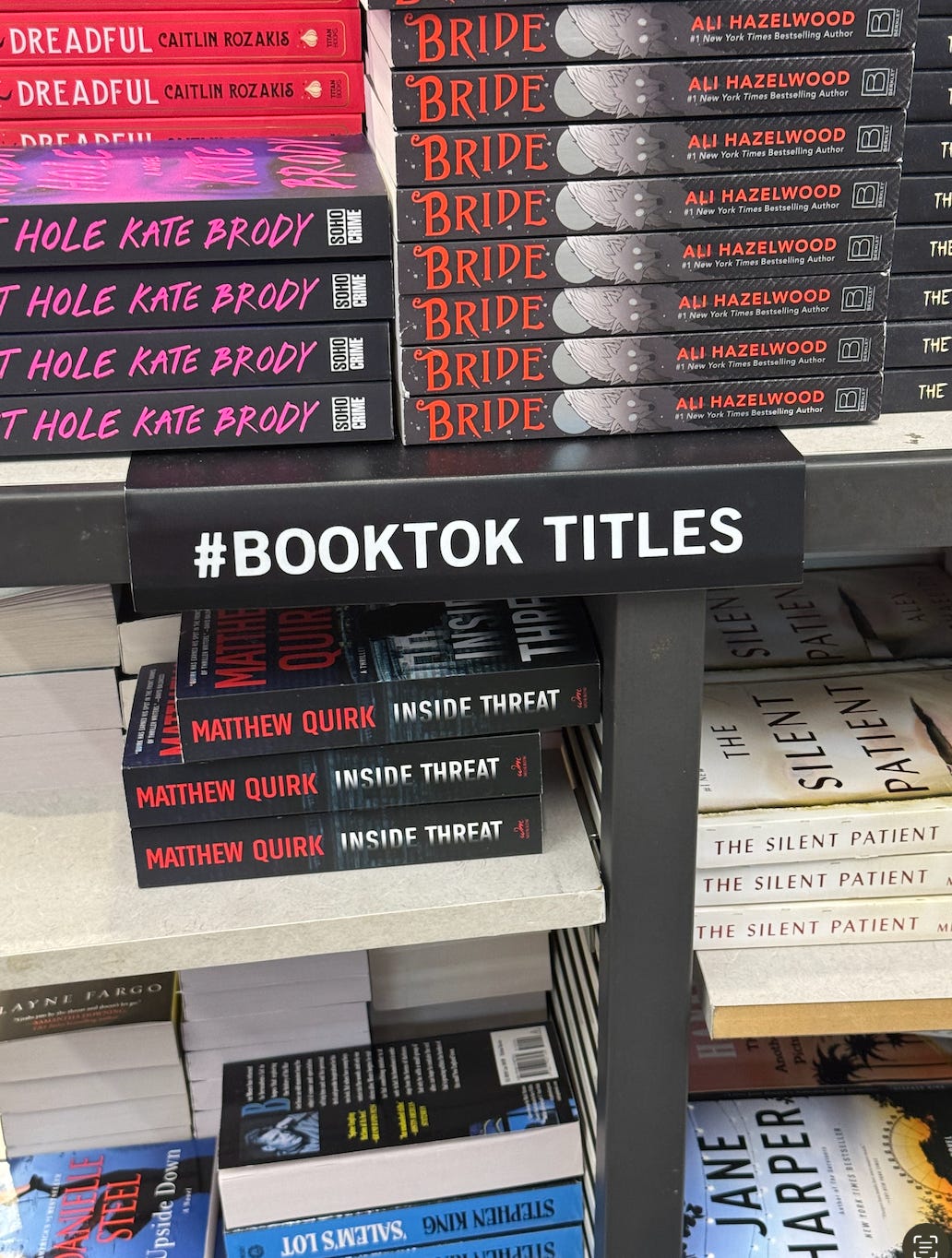
GB: But yeah, it is very interesting and I think—for authors—it's hell.
Rule number one is don't think about BookTok. Don't read the Goodreads reviews. Keep it moving.
I think you're right that even if you try to write towards a formula or what is big now, you’re doomed to fail—this is something that Ursula K. Le Guin talked about in her craft book. Do you really wanna sell towards what's right now? That is one way to be a writer, but I don't think it's the only way, and I think it can be really limiting.
EK: Well, going back to galley brag. People have a lot of different takes. Most of them boil down to a scarcity mindset, which is true to some point because you can only print a limited number of galleys to give out for free. But then the questions are: who's getting this? Who's not getting this? And another factor is the expected response/post—like, you aren’t going to send a galley to someone who you know will never respond to the book in any way. Maybe the hot take of how to manufacture a successful galley brag is to print two galleys and give it to two people and let everyone fight to the death over it?
GB: Well, I think that's what Deep Vellum is trying to do with Schattenfroh. I heard that they were really gonna only do a few of those. I don't know—what is my take?
EK: I mean, you also don't have to have a take…
GB: I know, I haven't done it yet! So, I think that on some level I'm still on the other side of it being like: give it to me.
EK: Hahaha.
GB: And this goes back to the point where—and I know this is going to sound so pretentious…
EK: No, say it!
GB: …I rarely get told no. I've only had that happen with Sally Rooney because…it’s Sally Rooney…
EK: Well, that's interesting. I have a friend who is in media, too, and sometimes we'll be talking about books and he'll be like, ugh, I really want a copy of that. And I’m like, bro, I promise you could email anyone you want and ask for a galley. And then he'll be like, okay.
GB: Ya! I think sometimes people don't realize how easy it's to ask. Like, get a free copy! Or at least try.
EK: Totally. I'm curious, do you feel like you receive a lot of things unsolicited? And with all those books vying for your attention, what is intriguing to you? What in that huge behemoth of new releases does pique your interest or stick out to you?
GB: Yeah, I think I am a little bit like, haha you think I'm gonna write about this and instead I’m going to write about that. I'm trolling a little bit. I do want to primarily work as a generalist. I have my pet interests, you know, which I do think when something in one of my pet interest lanes comes out or by one of my pet interest authors, I'm like, Great! I'm gonna read that. For instance, I love French literature, Frank Wynne is one of my favorite translators and so is Charlotte Mandell.
Sometimes I will look at an indie press and I’ll see that there's a new Annie Ernaux while I'm scrolling through Seven Stories.
I love memoirs, too. So, I'm gonna look out for those. And then I really like Russian literature. I think Max Lawton is a great translator, and I also read a lot of Japanese literature. I think one of my galley brags right now would be Wildcat Dome by Yuko Tsushima, which is gonna come out with FSG and was translated by Lisa Hofmann-Kuroda. Great book, I recommend it to everybody.
I like to look for rarities like that. I also love to write a long piece on an author's whole catalog. So, when I see that there's some reissues coming out, that is always going to pique my interest. I'm always telling New Directions, just send me everything that you have.
Ditto with the New York Review Books, I’m almost always like, okay, what's coming out? What could I try and pitch that's older? Europa also sends me a lot of books, which is great.
And then, in terms of newer stuff, obviously I am getting sent a lot of trans books either from friends or from publicity people being like, will you review this? I think it's probably 50:50 of me requesting and then just getting sent stuff.
I also love mysteries. I don't think this is widely known, but one of my first book reviews was Tana French. So I loveeeeeee mysteries. Like I just did a reading where we read Raymond Chandler's stuff.
EK: That's really fun. So, we talked about some stuff you have in that you want to brag about, but do you want to put out any calls for out-of-reach galleys? Where you are literally just like, I need to read this?
GB: Probably Authority by Andrea Long Chu and Trauma Plot by Jamie Hood, which is truly, I think, maybe one of the best things that's gonna come out next year. I'm really excited for that one.
I also managed to nab an early copy of Harron Walker's book, Aggregated Discontent, which is amazing and wonderful and talks a lot about labor. It’s really sharp and funny. I’m excited for everyone to read it.
I mean, I'll put it out into the world I want a copy of Schattenfroh. I've seen it go out to some people. I want it. Give it to me. That's one that I can think of. Also Helen Dewitt, which is also gonna be on Deep Vellum; they're kind of crushing it this year. There's gonna be a new Helen Dewitt called Your Name Here that I also really want. I think those are the two I want the most.
I also have a really, really early copy of The Deserters by Mathias Énard, which I’m really excited about. Énard is one of my French boys.
EK: OK, this has been so interesting. Thank you so much again for this, Grace. I haven’t talked to someone who is a book critic before and there is so much I don't know. I'm really just trying to figure out how to publish smarter and better. And it’s a particularly interesting time to be having these conversations because everything feels so deeply broken and everyone is sort of grappling with their own disconnection and discontent from all sides—authors, critics, bookstagrammers, booksellers, etc.. And I'm sort of like: what if everyone just helped each other and we just made all the good books good and all the evil books we can set aside in a different pile? But we’ll see…
GB: And to that I would say read Harron Walker! Charlotte Shane also did a lot of interesting writing about the economy of writing on her blog, Meant For You, which I encourage everyone to subscribe to.
EK: Yes, I have a galley of An Honest Women!
GB: Ah, have you read it?
EK: Noooo not yet…
GB: It’s one of my favorite books of the year. Honestly, I don’t know how an editor can read anything that isn't for work…
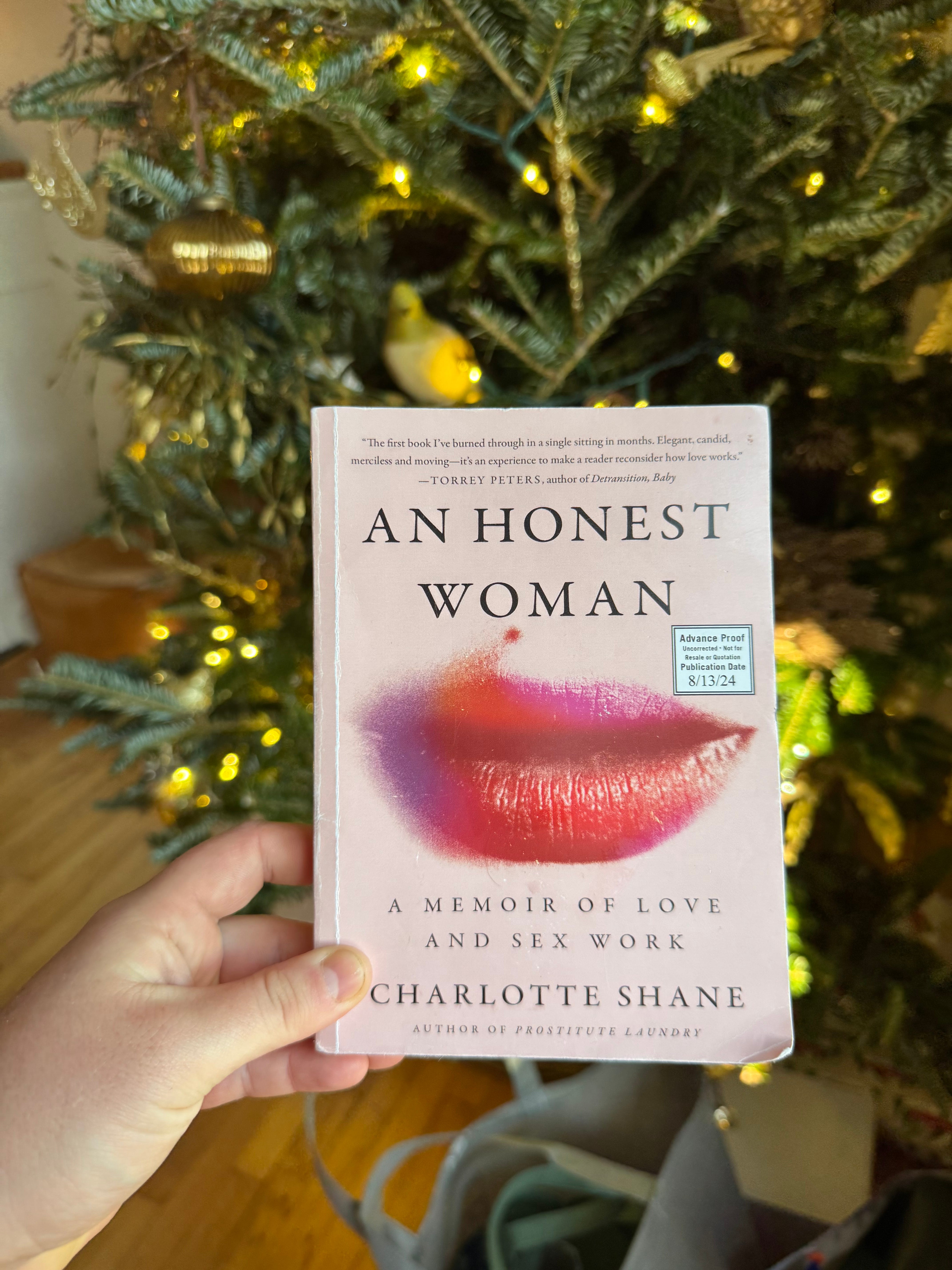
EK: Well, that's really the thing. Even with this Substack project, I'm just trying to read more articles and essays, period. And my brain is getting filled up so fast. Like, I'm in my room right now, and there are books everywhere. Have I read even a third of these? I truly don't know. I'm hoping that I can read stuff again soon.
GB: What is your galley brag?
EK: Uh…oh my god, I'm looking at my shelves. I would say the galley that I want is the new Gretchen Felker-Martin that's coming out next year. I'm sure you're gonna get that one…
GB: Okay, that one too! Hey, why haven't I gotten that one, yet?
EK: I don't even know what I have in right now that I would brag about. I feel like a lot of times the things that are the biggest brags for me is when there's an author I've been following online that I have no connection to except that I really like them and then I get a copy of their book…
Yeah. There's this book, which I’m actually reading it now, called Coup de Grâce. The author’s name is Sofia Ajram and they’re based in Canada. It’s this really slim horror novella that was published by Titan Books, and it's so fucking good.
But basically they're really online, and they're also just like a cool metalsmith. I’ve been following them for a while now, and we’ve been messaging on and off forever, so I've been just really happy to see the book doing well. And when I was able to go to the store and buy it, I was like okay, this is a brag because I'm so excited about this.
GB: I don't know if you've read LOTE, the novel by Shola von Reinhold. You couldn't get it here, no one had it. You had to like buy it from Am*z*n…
EK: See again, it's this whole scarcity thing! Anyways, I'll let you go. But this was really fascinating, and I really appreciate it. And we should also get a drink in the new year.
GB: Yeah, that would be so fun!
Personal Brags (aka what I’m gabbing about in my group chats!)
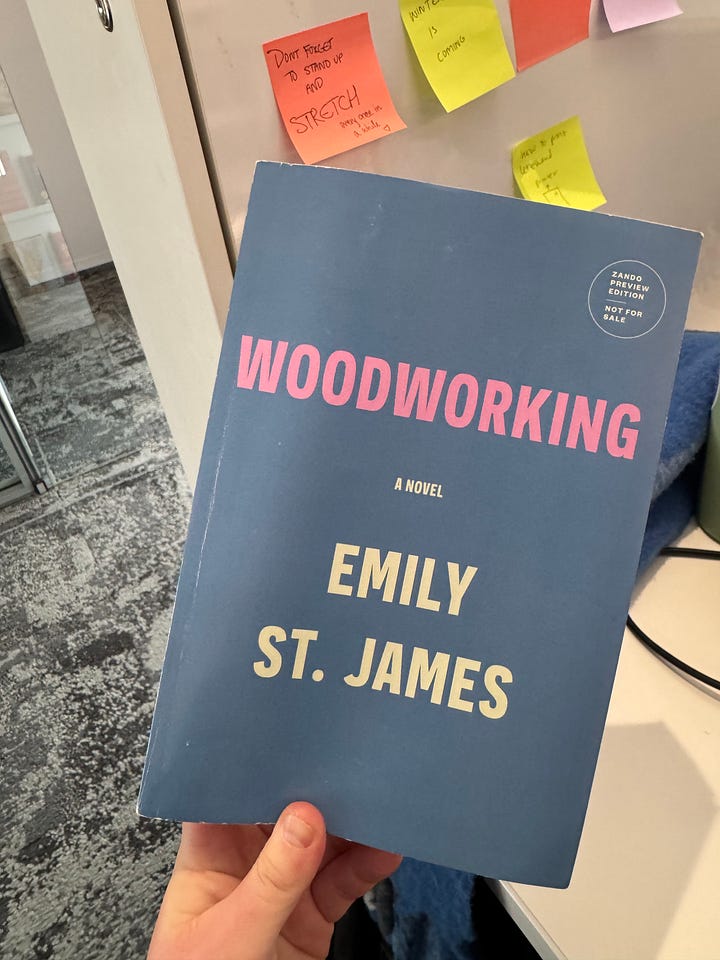
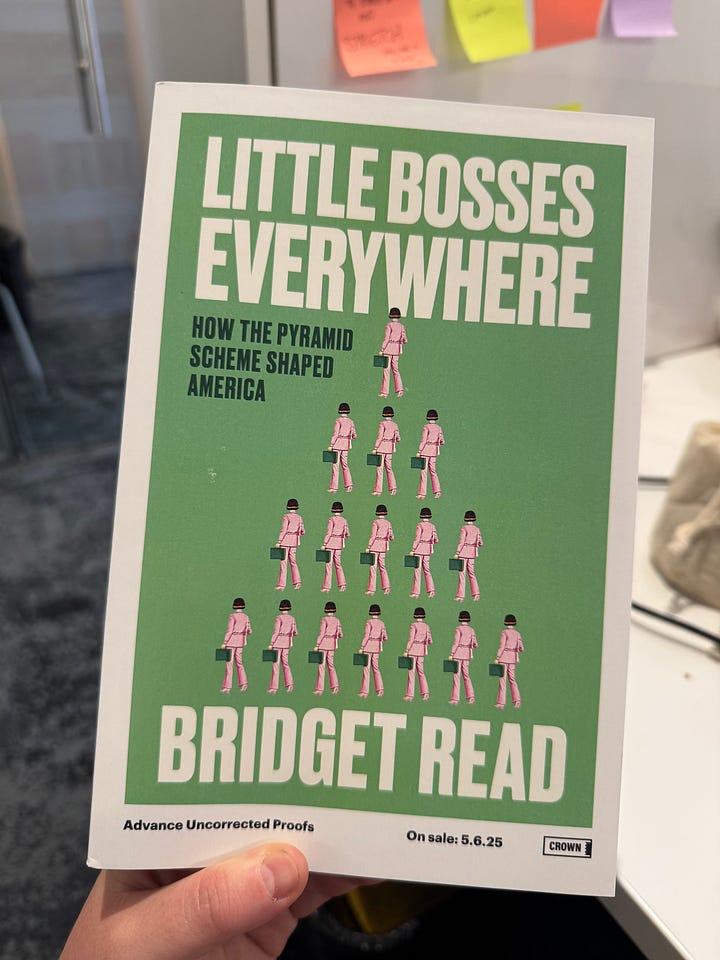
Some galleys I got this week (aka begged for). My coworker gave me a copy of Emily St. James’ Woodworking, which I’m really psyched about. And then I begged editor queen Aubrey Martinson to send me a copy of Bridget Reads’ Little Bosses Everywhere. Love the title and LOVE anything MLM related…
Obviously I read The New Yorker plagiarism piece, but even more than the interesting questions about IP in a crowded genre, I was really struck by this line:
“All genre fiction (and arguably all fiction) is patterned on tropes, or received bits of narrative. But tropes have assumed a new importance in the creation and marketing of romantasy. On BookTok, users sort and tag titles by trope (#morallygreymen, #reverseharem, #daggertothethroat), allowing authors to tune their creative process to the story elements that are getting the most attention online.”
If the tropes become “morally grey” and authors/publishers are then writing/publishing to those tropes in order to get traction, where is the ethical/moral line? Is there one? Was there any to begin with?
Texting friends about the wildfires in LA…not anything original to say other than it’s really fucking scary and I feel awful about everyone losing their childhood homes, unhoused folks / those who don’t have access to cars + friends’ homes, incarcerated folks that are fighting the fires to shorten their sentences for less than $10 a day, water / wealth hoarding, AI + weaponry + everything else that is fast tracking us towards destruction, etc. etc. Lots of people have been sharing the MALAN resource doc, but pls LMK if there are others…
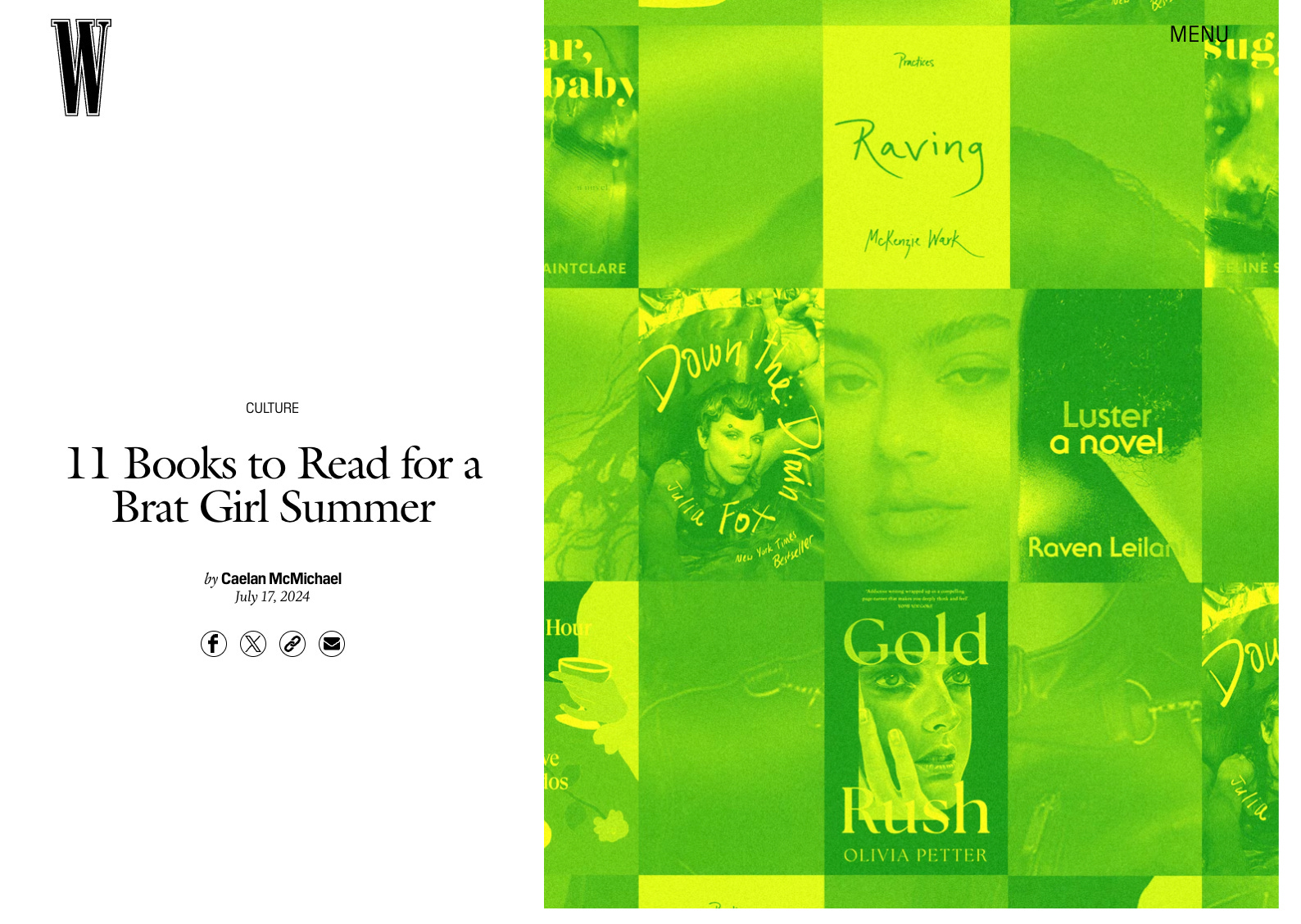
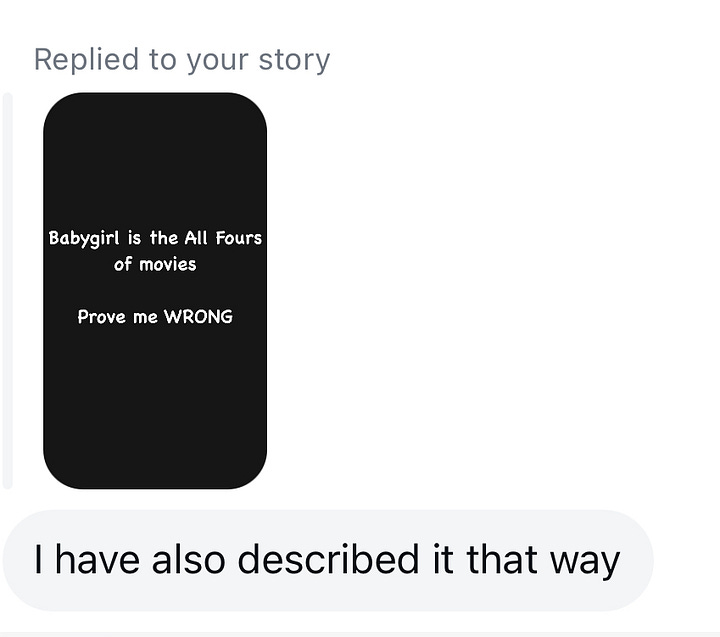
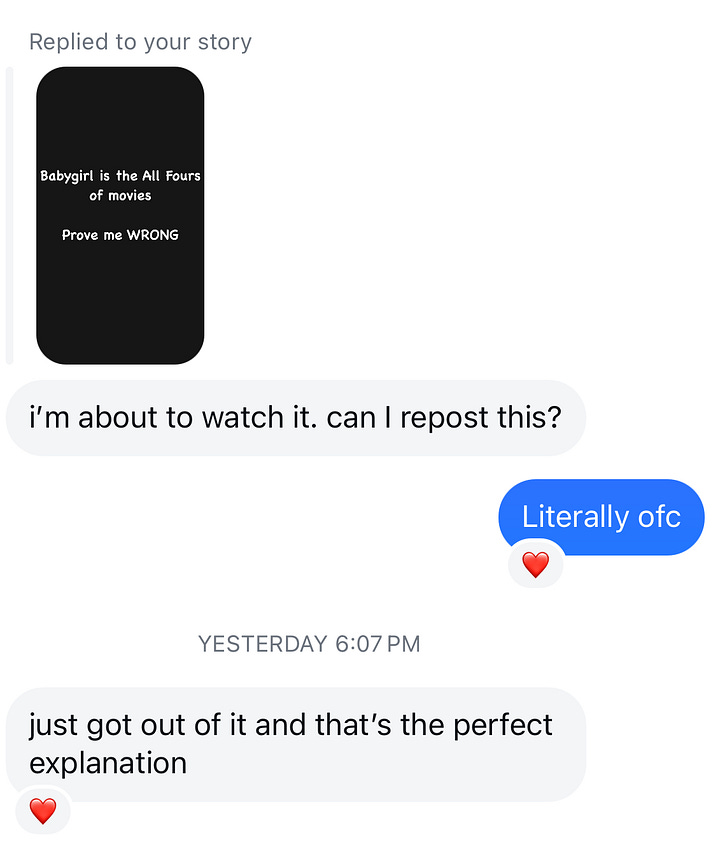
On a very different note, I saw Babygirl and afterwards I told my friend it reminded me of All Fours—enjoyable, transgressive to a certain audience, cute to others—and it seems I wasn’t the only one. That said, I have been listening to “Father Figure” an unhealthy amount…
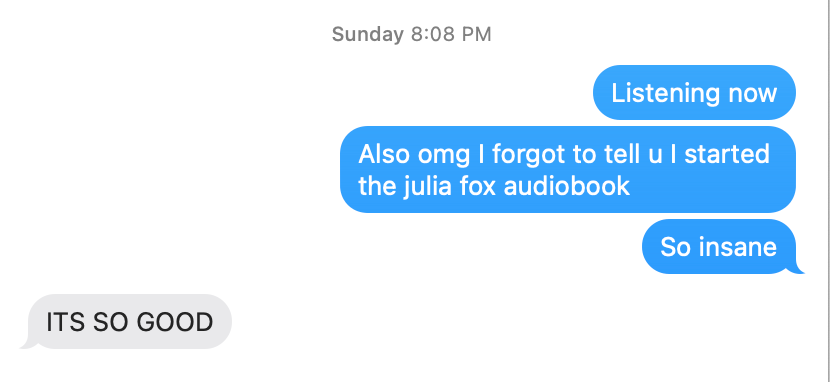
What am I reading? Submissions, submissions, and more submissions….BUT I am trying to make a commitment to listen to more audiobooks. I’m listening to Down the Drain by Julia Fox right now (shout out to the Libby app!) because my friend (also named Julia, who designed my logo, woohoo!!) told me I simply had to. I’m loving it, but my partner is always very confused when I play it out loud while doing dishes and is like…literally what is going on…?


One of my authors, Zefyr Lisowski (author of forthcoming Uncanny Valley Girls! Harper Perennial! October 2025!) started a Substack called Blood Blisters about “violence, intimacy, revolutionary desire, and their representation in the books and movies that vex us.” It’s so good, and I really enjoyed her critiques of Nosforatu (even though I did loveeeeeee Nosforatu…).
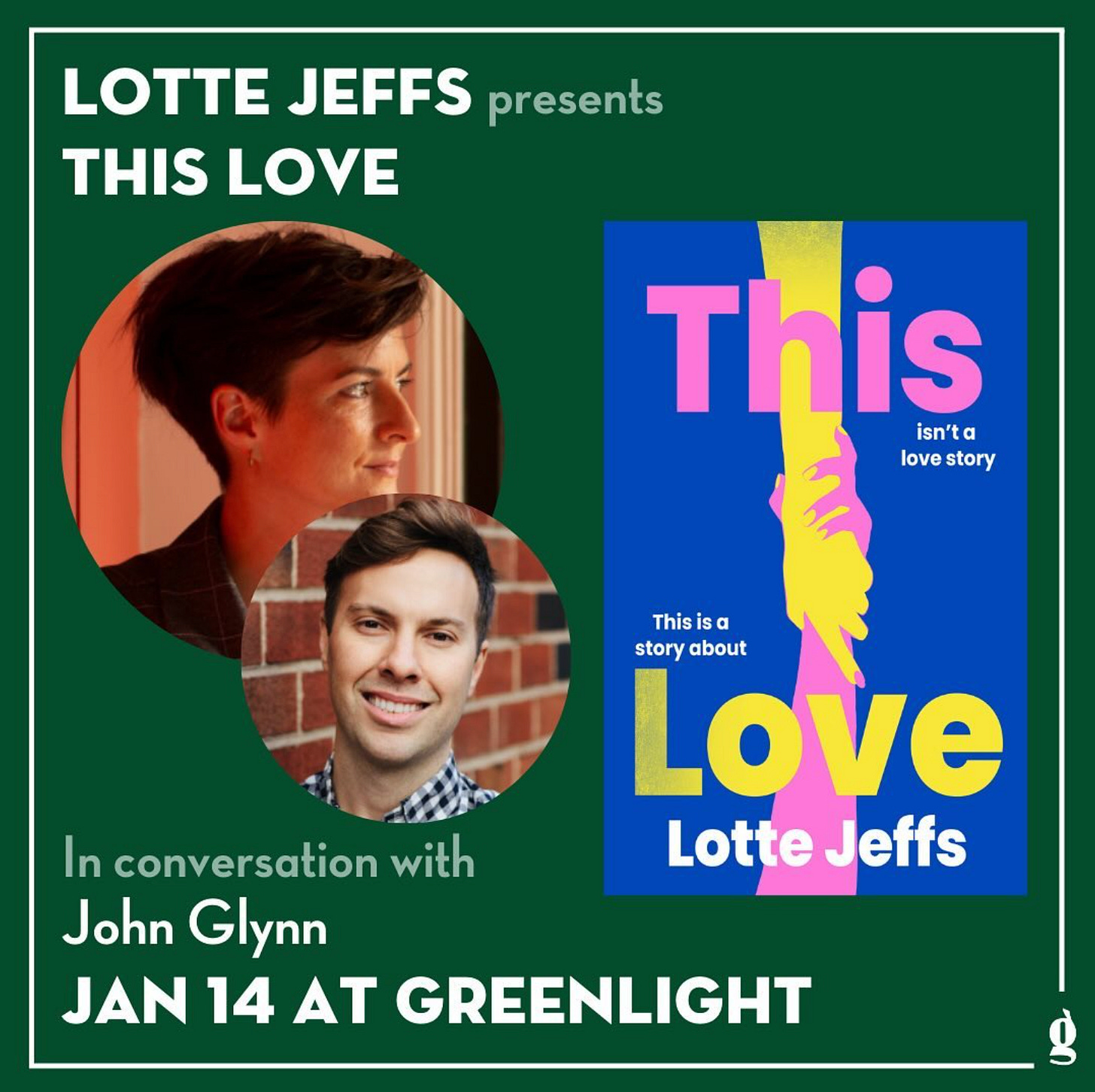
Okay, this is already too long but I have to do a shameless plug I’m so, so sorry…This Love by Lotte Jeffs is out next week and they are doing an event at Greenlight Bookstore in Brooklyn! Register if you’re in NYC and check out the book if you are not :)
legendary linkup!
Ezra you are so funny and such a good interviewer, reading every single one of these is a right laugh. I'm cackling away at all the dark academia and booktok jokes. There are so many things while I read where I think *I need to write about this in the comment* and when I get here, there are so many points I wanted to make they've all disappeared from my brain? I think I need to start bringing a notebook to your pieces lol. Being a book snob is something I grapple w on a daily basis too - sometimes I'm like this needs to go it is not fair and other times I think.... this is my saving grace, I am an impeccable tastemaker, I will not let go of this viewpoint. It is a conflicted existence 😉
Loved all the book marketing comments, especially because writing about books is just my hobby so it feels like such a window into a world I just skirt around the outside of. The multidisciplinary expectation on writers to also be marketers is crippling and stupid. Publishing houses have got to move away from BookTok & trad media and wake up to all the book shit that is happening on Substack (for example) because it is a gold mine here? Marketing a book should not be THIS hard. I think its safe to say Charli has changed everybody's brain chemistry when it comes to marketing.
To Grace's point that the books that do well on BookTok also do well on Substack - I am actually not sure I agree. There is always cross over, there are people from BookTok here, there will always be books that puncture the consciousness no matter the platform (eg all fours lol I could not escape all summer) but I think there is a marginally bigger appetite here for 'backlist' and generally anything that isn't things published that year. Imo there is a tad less urgency on here, due to the ecosystem of the site, slightly more thoughtfulness about it all, and I think it produces a different result in the books that end up circulating (if any circulate at all? it all feels very individual in my corner). Maybe I am looking at it w rose tinted glasses bc I am here and not on booktok but when I was trying to figure out where to start talking about books, I thought I do not have the right stamina or surface level takes/absence of criticism for booktok. (marginal slander). Idk if others on substack would agree - I'd be interested to know if they do.
Loved all the Q's you asked about Grace's experience w book criticism and how much agency she is able to have over the books she reviews! Fascinating. Seething w envy at Grace's unbelievably early galley of The Deserters because I have been told I can have it but I have to wait a month or two :'( Patience, this time, is not a virtue.